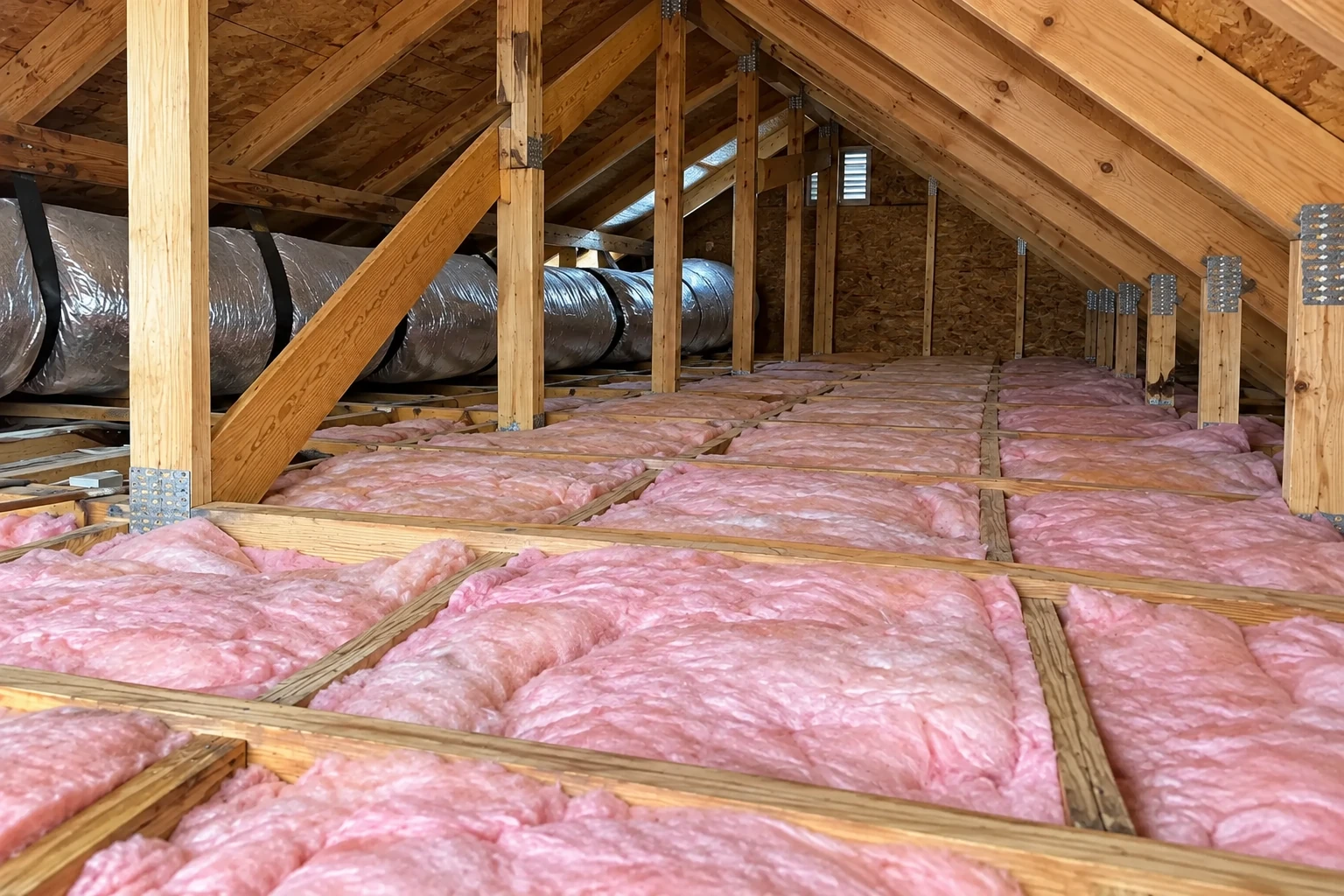
Thin plastic over the floor
This suits a dry crawl space, a tight budget or a house you're selling before long. It's the cheapest way to cover the dirt, but it wears out sooner and tears the first time a plumber drags a toolbox across it.
Musty smell, damp dirt or torn plastic under the house? We fix the water first, then lay a liner that holds ground moisture down.
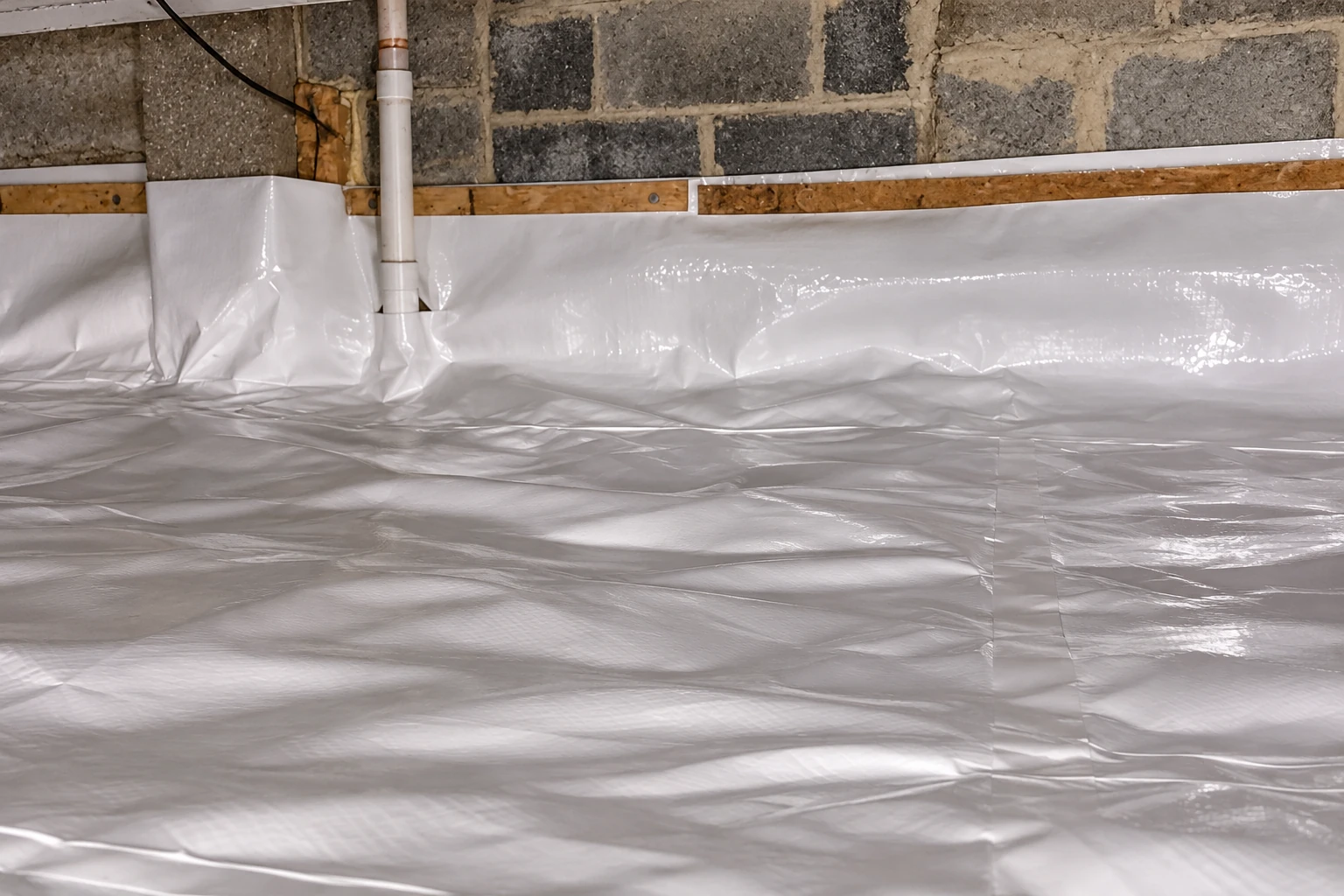
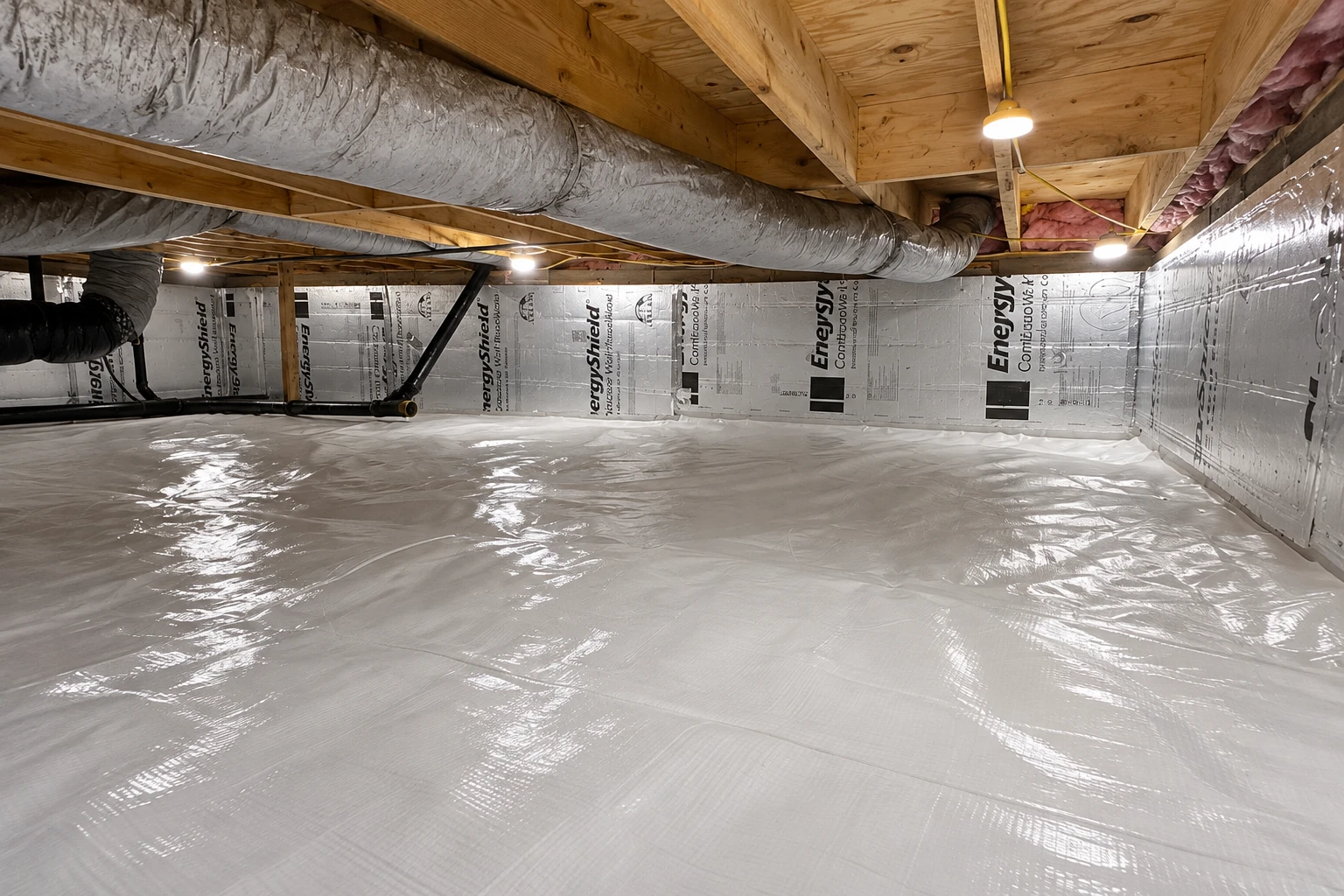
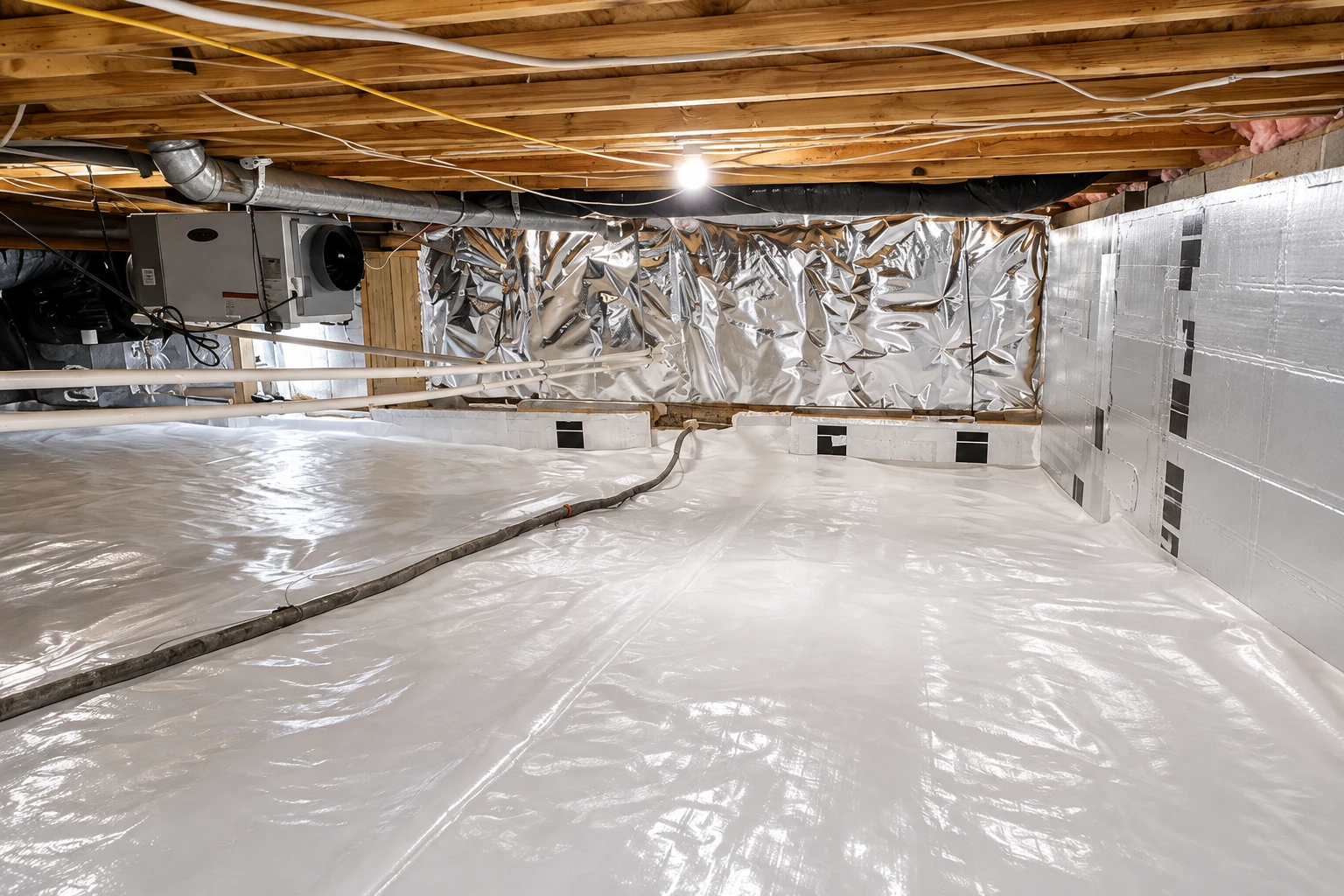
A crawl space vapor barrier in Longview is plastic sheeting that covers the whole dirt floor under your house and runs up the foundation walls and piers, so moisture from the ground stays down there instead of creeping into your floor framing and the rooms above.
Most folks call us because the floors feel cold, the house smells musty after a rain, or somebody finally peeked under there and found bare dirt or old plastic torn and bunched in the corners. Plenty of people have never been under their own house, and I don't blame them one bit. The price mostly comes down to how big the crawl space is, how heavy a liner you pick, whether it stops at the floor or runs up the walls and piers, and whether there's water to deal with first. The schedule turns on that water too, since any drainage fix comes before the liner, and on whether the city wants a permit for your job. Your estimate spells out which areas and which materials the job covers, so you know what you're paying for before we start, and if the floors are cold as well, crawl space insulation often goes in at the same time.
When you call, I'm the one who comes out, looks the crawl space over and writes the estimate, so the person pricing your job has actually seen what's under your house. Then our own crew lead and installers do the work, not a crew you've never heard of.
I got started doing weekend side jobs for neighbors around Longview, blowing attics and sealing drafty houses, and I learned the trade by doing it and asking a lot of questions. Word got around, and it became my full-time work in 2013, so that's 13 years now.
We're licensed and fully insured, which matters when a crew is working under your floor around pipes, wiring and ductwork. If you'd like to see proof, just ask when I come out for the estimate and I'll be glad to show you before anybody crawls under your house.
If thin plastic will do the job for your house, I'll say so, and if a fully sealed crawl space isn't worth it for you, I'll say that too. I'd rather you understand exactly what you're buying, and we back the work with one promise. Satisfaction guaranteed.
Call (903) 309-1886 or send the form with the rough size of your crawl space and any water or dampness you've noticed, and we'll reply within one business day, a lot of the time with me on the phone. Then I come out for a free estimate at your property, look the space over and write down which areas and materials the job covers, with no pressure and no obligation.
Whether a vapor barrier job needs a permit in Longview is the city's call, and it's not something I guess at. Before work starts, we check with the city's building office and find out what it asks for on your job, and if a permit is needed, we take care of it as part of our work and tell you up front. The city's permit portal is set up for contractors and licensed trades, and if you'd like to ask a code question yourself, the city's Building Inspection staff help homeowners with code requirements before a permit is issued.
Longview sits in a warm, humid climate, so a crawl space here has moisture coming at it from the ground and from the air, which is why we take the water and the air question seriously instead of just rolling out plastic. If your house is in or next to a floodplain, the city's Floodplain Administrator reviews and inspects construction there under the city's flood rules and FEMA's, so that's worth knowing before any work starts. We're based in Longview and do the same crawl space work in the cities around it across East Texas, including White Oak, Kilgore, Tyler and more.
Across the US, a basic vapor barrier that's just plastic over the dirt floor usually costs about $0.50 to $1.50 per square foot. That's the going rate nationally, not our price, and it doesn't include a heavier liner, running it up the walls and piers, fixing drainage or sealing the space, which all add to it. Give us a call and I'll come take a look at yours.
One cost publisher puts thin 6-mil contractor-grade plastic at about 3 to 5 years and a 20-mil reinforced professional-grade barrier at 25 years or more. The heavier one costs more per square foot, but you replace it far less often. If you plan to stay in the house, I usually think the heavier liner is the better buy.
Start by deciding whether the crawl space will stay vented to the outside or be sealed and conditioned so it's treated like part of the house, because that one choice sets what gets sealed and insulated. Going sealed can also bring changes to how moisture and ventilation are handled, so it's a bigger job. I'll walk through both at the estimate and tell you which one I'd pick for your house.
It can be, as long as the air gets a plan, because sealing a house tighter can trap pollutants like carbon monoxide and chemical fumes and make conditions unsafe. That's why a sealed crawl space job may include added ventilation fans and fixing whatever is putting pollutants into the air. One industry voice says codes call for a mechanical way to handle the air once a crawl space is sealed, such as continuous exhaust, conditioned air from your system or a dehumidifier, and I'd rather plan for that up front than leave it out.
Usually not, because the work happens under the house through the crawl space door, and laying plastic isn't the kind of job that sends a family outside. The kids and pets can stay home, though they'll hear us bumping around under the floor. If your job adds foam on the crawl space walls, that's different, and I'll tell you at the estimate when it's safe to be back inside.
If it's torn, bunched up, missing in patches or holding puddles on top, it isn't doing its job anymore. Plastic that only covers part of the floor and never runs up the walls leaves gaps where moisture gets right around it. If you'd rather not crawl down there to find out, I'll look at it when I come out.