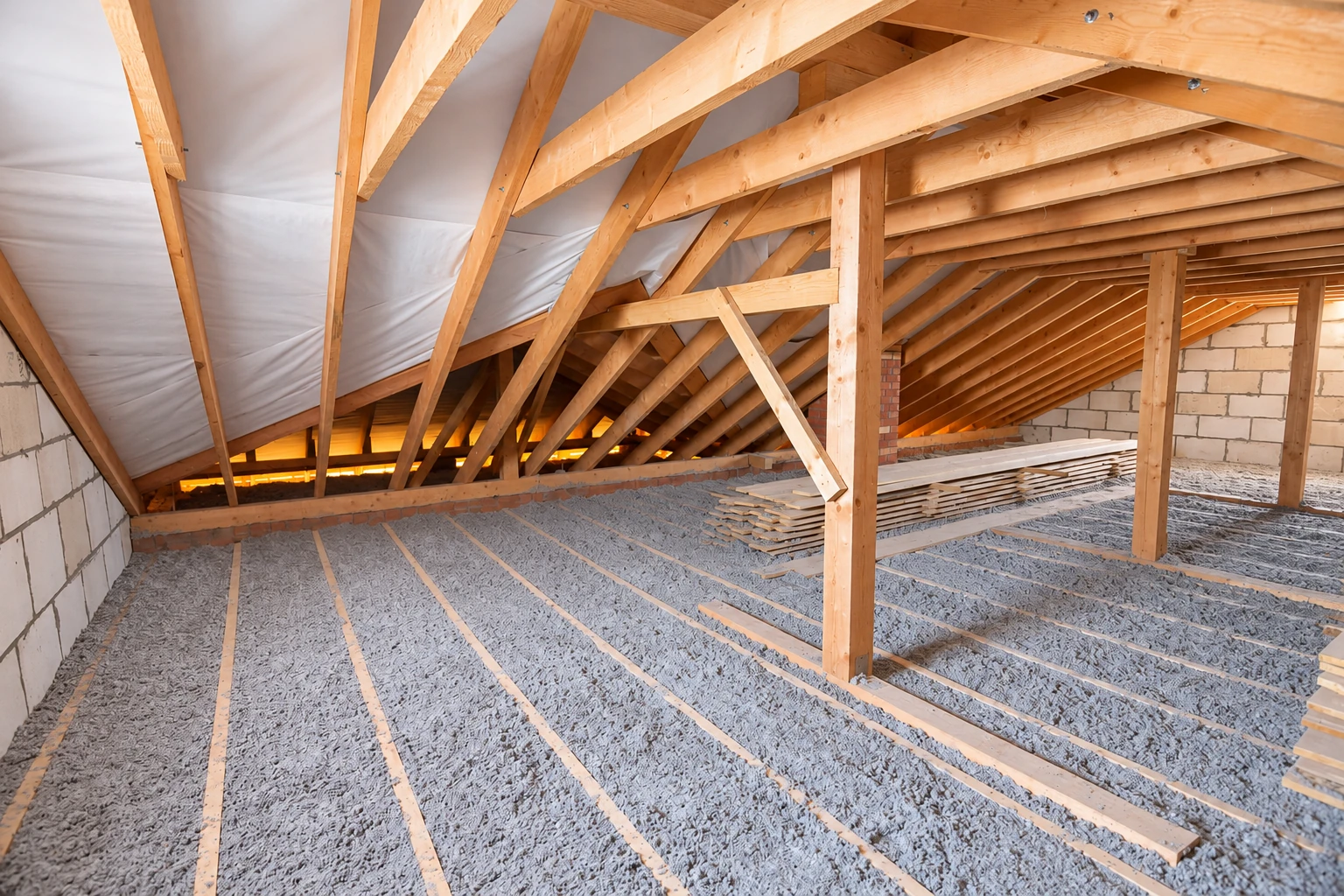
I start in the attic, because that's where most older houses lose the most and where the trouble hides, and I check how deep the old insulation is and whether any of it is wet, matted or full of droppings, since fresh insulation over a bad layer just buries the problem. Once anything bad is out, our crew seals the gaps around can lights, pipes, wires and the attic hatch, then tops up the attic with blown-in, which is loose fill blown through a hose, right over the old layer. For closed walls, we drill small holes, dense-pack the cavities by blowing the fill in tight, and patch the holes, but only where the wall is sound enough to take it, and if it isn't, I'll tell you instead of forcing it.
Retrofit work overlaps with a couple of our other jobs. If the attic is the whole story at your house, our attic insulation page covers that work in more detail, and if your ductwork lives up there, spray foam insulation at the roofline is worth a look for the reasons in the second option.
Seal the gaps and top up the attic
This is the right call for most older houses around here, because it stops the drafts and fills the thin spots for a good bit less money than foam. Once the leaks are closed, fresh blown-in over a sound old layer does most of the heavy lifting.
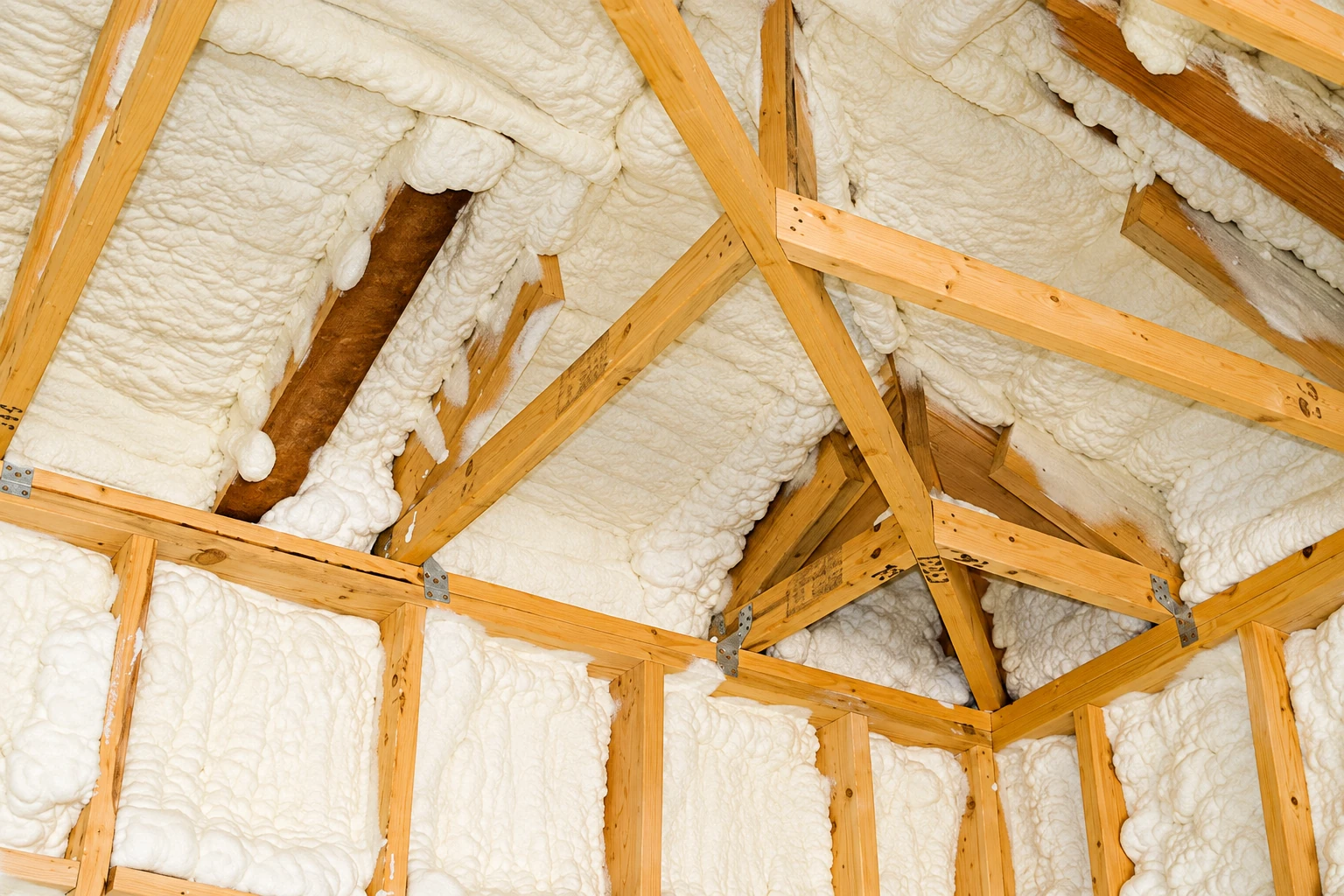
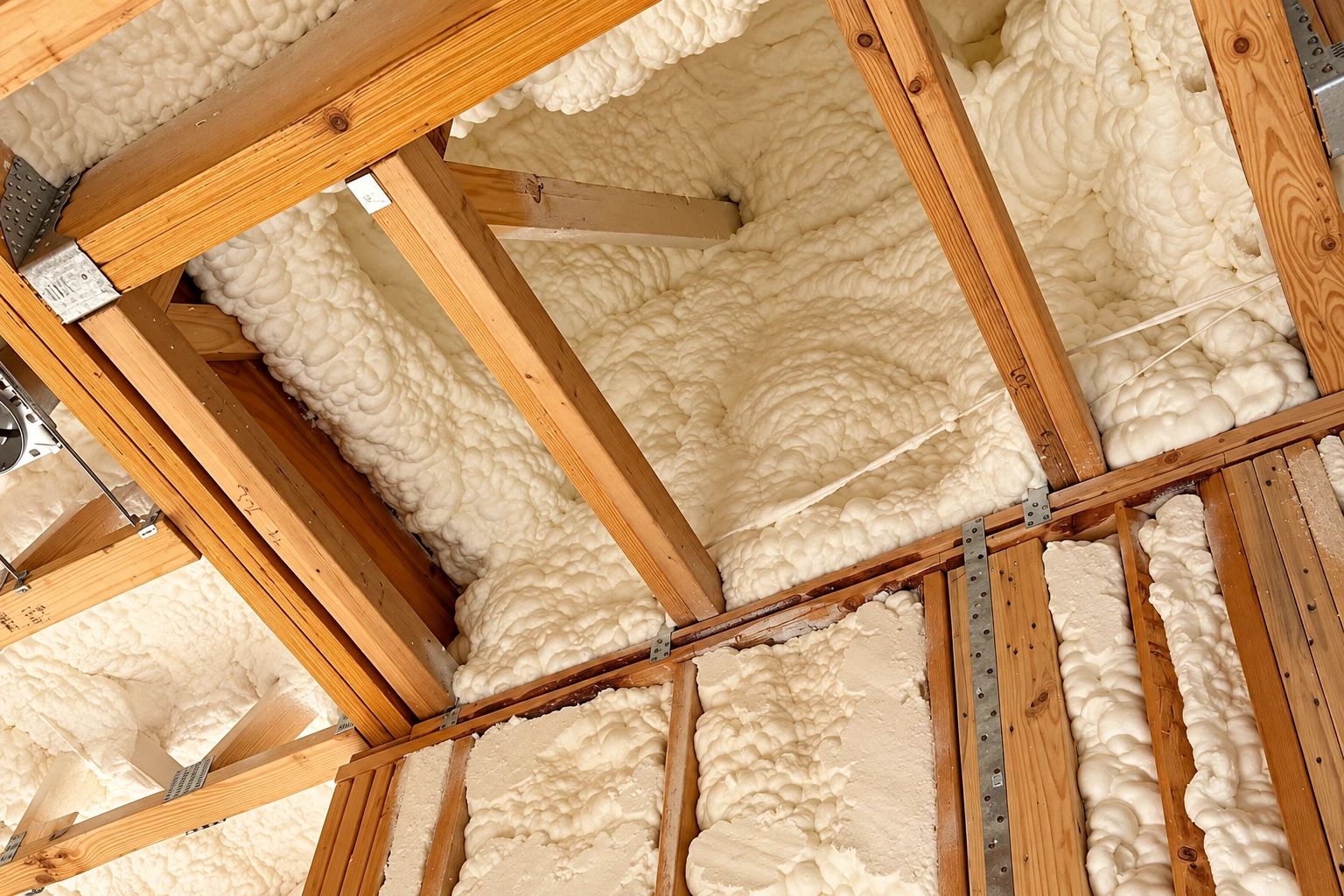
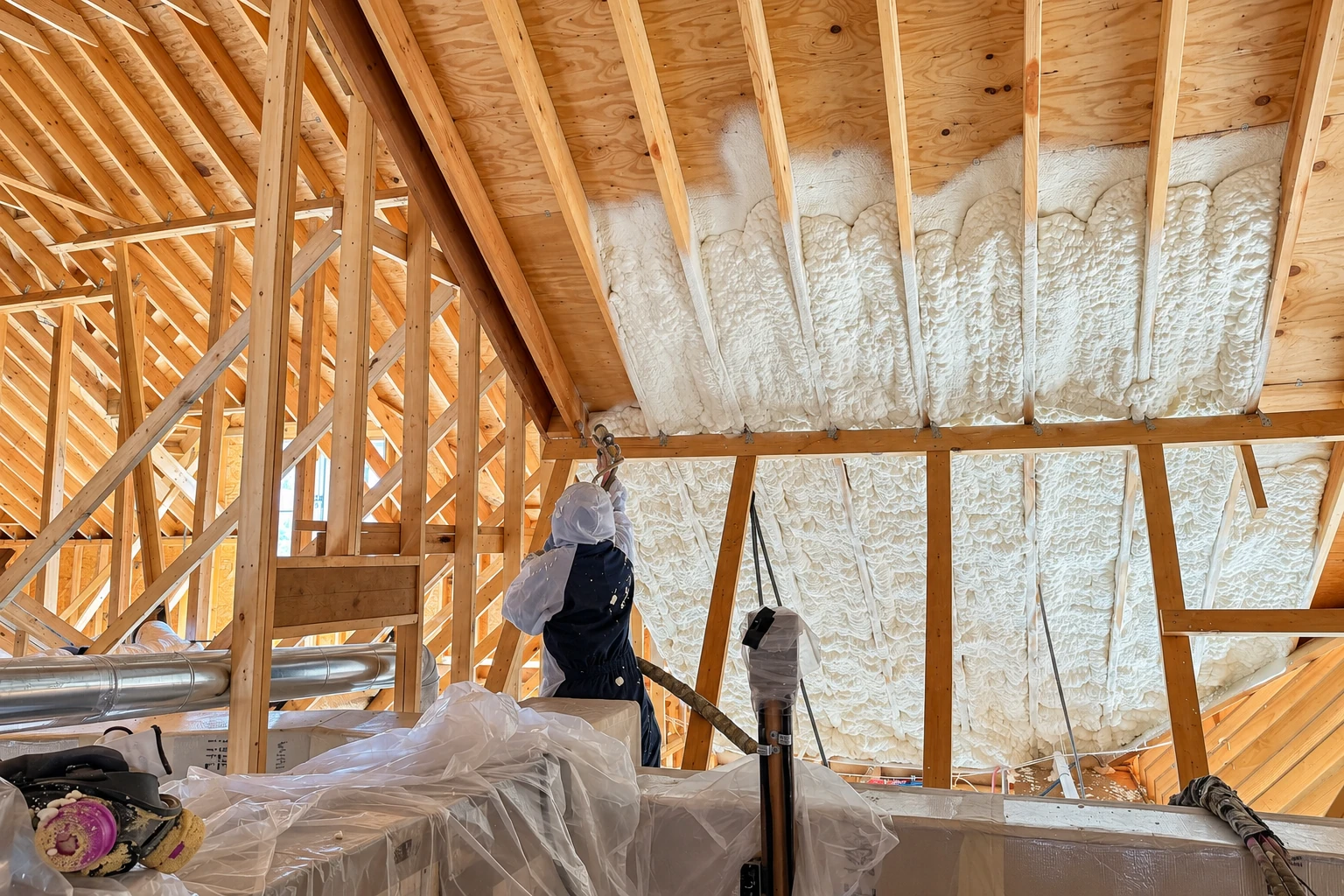
Spray foam when the ducts are in the attic
Foam costs more, but it blocks air and slows heat in the same coat, which pays off when your ductwork and air handler sit in the attic. Foaming the roofline pulls that space inside the house, so the ducts aren't sweating it out in a hot attic all summer.